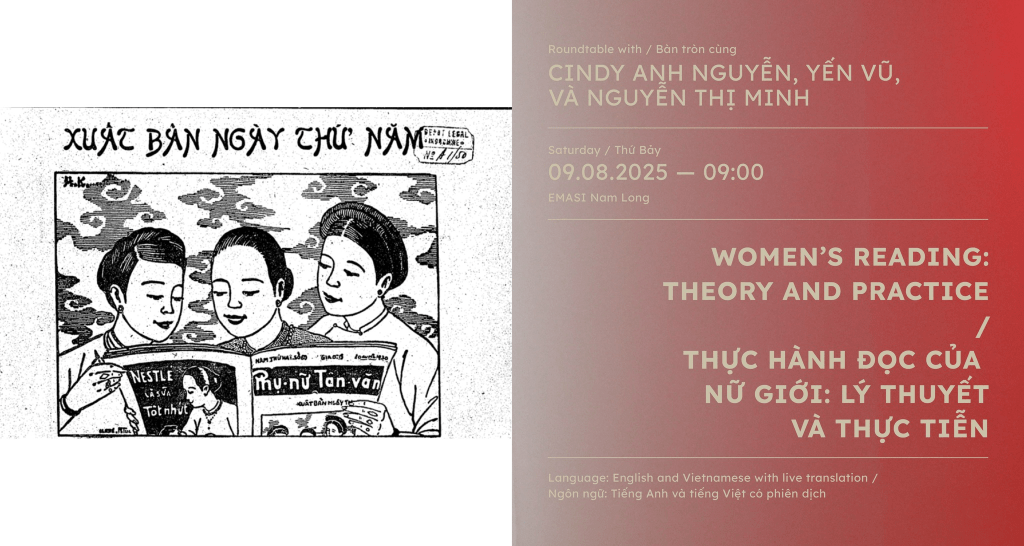
This dream panel is happening! I’m joining two scholars I admire, Cindy A. Nguyen (UCLA) and Nguyen Thi Minh (University of Education, HCMC) for a roundtable on how women read and contribute to feminist epistemology in our reading practices in the field of Vietnam Studies.
Thank you to Nguyen Art Foundation for making this happen.
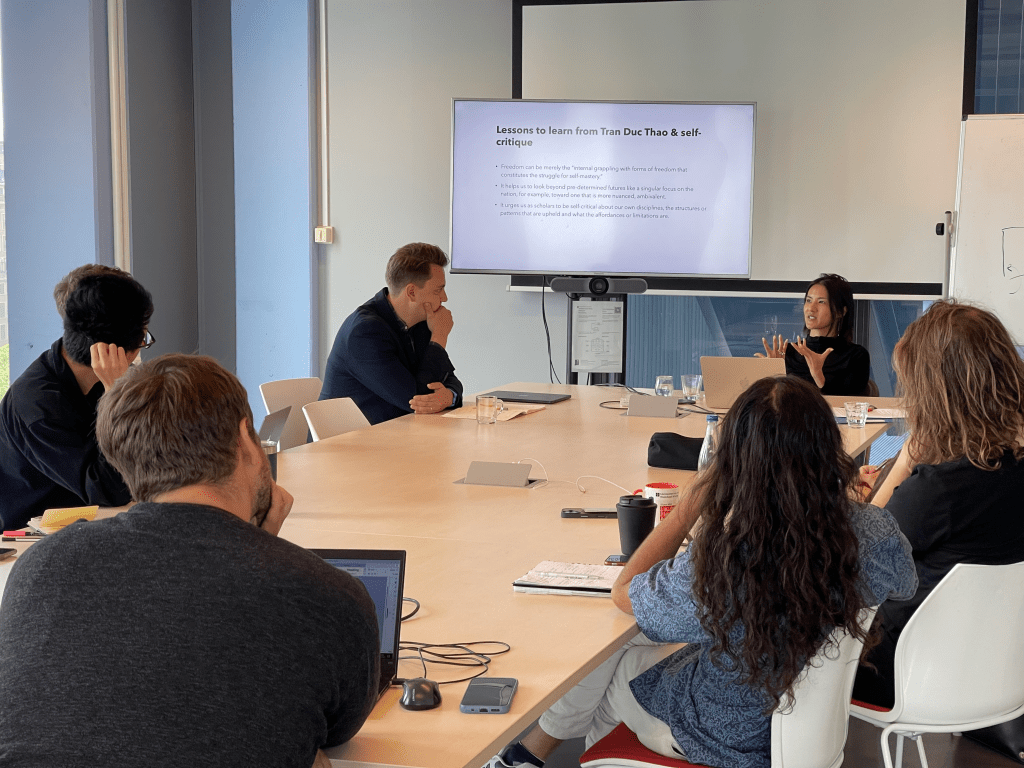
This summer I am in Amsterdam for a residency with the Decolonial Futures RPA. I presented a masterclass to a group of political theorists (a first for me!) in which I discuss the self-criticism (both the political practice and the philosophical method) of Vietnamese philosopher Tran Duc Thao and how he fits into the larger framework of my manuscript Language as form.
Why write in a language that is not one’s own? Can doing so be a decolonial act?
This masterclass returns to a fundamental question of freedom and expression in language, notably in a colonizer’s language. Drawing on scholarship on Vietnamese intellectuals writing in French in the 20th century, Yen Vu proposes to read such writing as a choice in form. Rather than engaging with why these writers write in a language that is not their own, which have preoccupied the conversations in both Postcolonial Studies and Vietnam Studies, she asks what happens when one writes in French. What emerges, or to what effect, does writing in French afford the Vietnamese?
This conceptual shift toward formal analysis allows us to demystify the various forms and shapes that freedom has taken in Vietnam, whether anticolonial, nationalist, anticommunist or even anti-Confucianist. We will examine in particular how reading language as form elucidates the thought of Marxist philosopher Tran Duc Thao and his self-criticism – as a political practice and a philosophical method. Writing in French thus did not need to render some clear outcome or participate in nationalist projects. Instead, we can consider the alternative possibilities of writing in French, such as how writing in French allowed these intellectuals to contemplate a world and existence beyond their immediate circumstances, to conceive of decolonization in ways beyond mere relations of power, or to engage in philosophical questions about form and content.
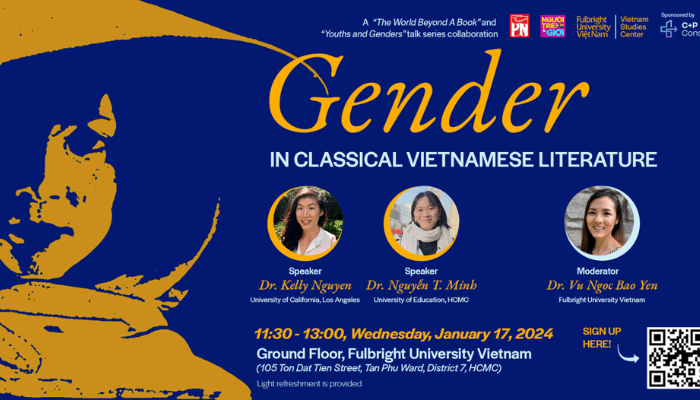
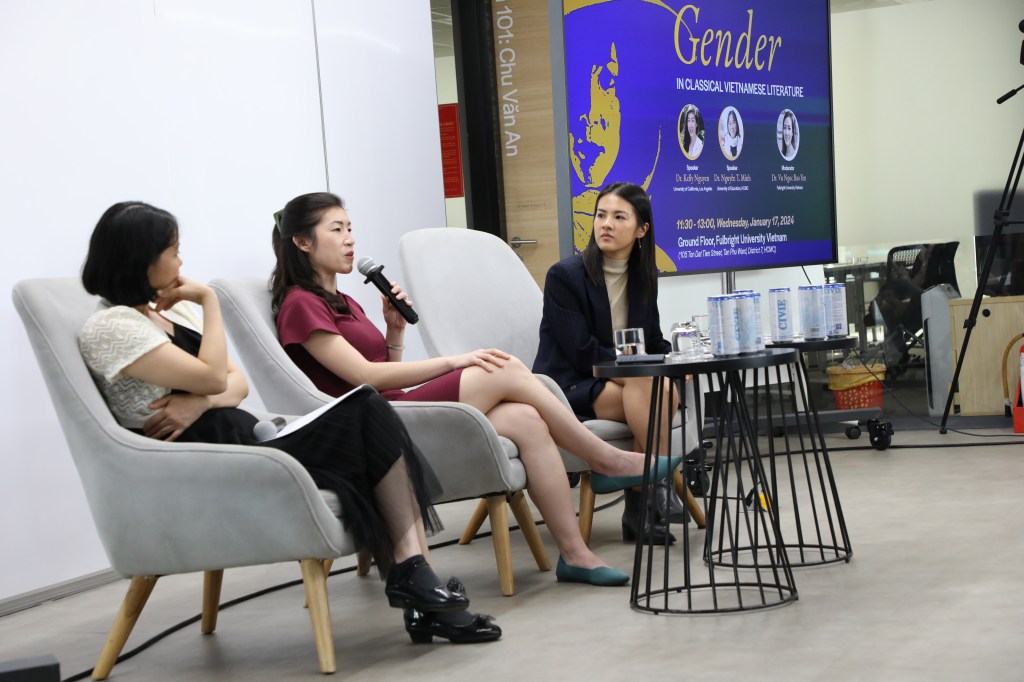
There are many exciting things happening at Fulbright, including initiatives for a Gender & Sexuality Studies minor and creating more space to discuss gender more generally. Last month, Fulbright’s Vietnam Studies Center and Vietnam Women’s Publishing House organized an event (headed by one of our seniors Nguyen Minh Tien) that hosted Drs. Kelly Nguyen (Classics, UCLA) and Nguyen Thi Minh (Department of Vietnamese Literature, Ho Chi Minh City University of Education).
One thing I took away from this event is how much patriarchal systems can cloud the way we interpret experiences (not only in literature), often in the service of those systems. Nguyen Du’s The Tale of Kieu is thus one prime example to see that in action as well as offer alternative perspectives. Reading Kieu in competition with the other women in the narrative, as the only and ideal woman who is noble or virtuous, and always in relation to men in heteronormative contexts are ways that we might frame “female empowerment” yet reify patriarchal standards. What would instead be transgressive is the solidarity and camaraderie between Kieu and Hoan Thu, creating space for ambivalent experiences such as jealousy AND compassion. Personally, I think that is more reflective of human experiences. Or, perhaps thinking about Kieu being in love with love, and not just Kim Trong, which valorizes her love for the other women and herself.
In addition to the brilliant exposés given by our presenters, it was also a good reminder of the ways we can be complicit in those systems when we wish to be legible, when we prioritize solutions and outcomes that are rewarded in our capitalist society, etc. The way then that we transgress is to support other women and their voices, and I was extremely grateful to have gotten a chance to moderate the event and learn from my fellow women colleagues.
I am speaking with the UC Berkeley Francophone Studies Working Group about my research on Montaigne and Nguyễn Mạnh Tường. This comes from my manuscript regarding Vietnamese engagement with French thought and language.
The talk takes place May 1st, 5pm PST/May 2nd 7am HCMC time. You can register for the talk here: https://bit.ly/3Ae8D1G
Abstract: The way that Vietnam has been examined in French studies has been bound by the colonial context, limiting the way that its francophone cultural productions and intellectual activity can intervene in the disciplines of literature and history. How else might we approach these works? This presentation puts the francophone works of 20th century Vietnamese intellectuals into a larger context of the linguistic, social and political changes of the region during this period. We can better grasp the stakes involved in choosing to write in French, or to engage with Western thought, which involve as much an individual search for freedom as it is to articulate national independence. These ambivalences in language thus are not just a byproduct of the colonial encounter but allow language to become a medium and a space for the negotiation of meaning. Taking the example of Vietnamese intellectual Nguyễn Mạnh Tường and his engagement with Michel de Montaigne’s philosophies, this presentation shows how it provided him a language of epistemological critique that would in turn influence his intellectual involvement in North Vietnamese politics after colonial independence. In this sense, Vietnamese francophone works can be valorized not only as rich sources to study colonial experiences, but also works we can return to for continuous epistemological inquiry.
[This working group is generously supported by the Townsend Center for the Humanities and this event is co-sponsored by the Designated Emphasis in Renaissance and Early Modern Studies (REMS).]
In this last International Conference on the Tonkin Free School, I presented on how the inclusion of women in the discourse of education, as a tool to strengthen the nation, was an important first step to discussing the role of women in society.
Below is a detailed abstract of my presentation, which I will also be presenting as a longer talk with the Department of Asian/Pacific Studies at the University of Victoria in December.
I open with an excerpted poem from Phan Bội Châu’s Nữ Quốc Dân Tu Tri (1927), a textbook for the moral education of women. The main message in this lesson for women to retain is as follows: If anyone asks if you have a husband, tell them that you are married and that “his Surname is Viet and given name is Nam.” This excerpt is an example of how Phan Bội Châu and intellectuals like him negotiated certain modern ideas of nationhood with discretion, in relation to the Confucian morals that organized Vietnamese society up until then. The fact that women, too, were capable of expressing nationalism by affirming a social role – here, her loyalty to her husband, indistinguishable from none other than the nation itself – shows how central the question of women’s status in society was to ideas of nationhood.
In this presentation, I argue then that the co-education of women in the early 20th century, as modeled by the Đông Kinh Nghĩa Thục [Tonkin Free School] (DKNT), presents an irreconcilable paradox about women’s status in Vietnam that effectively reflects how the Vietnamese more generally were grappling with new ideas of nationhood. While women’s roles and responsibilities were simultaneously considered as national contributions, in a way that legitimized the separation of gender roles, this co-education also broke down barriers and boundaries that represented productive intellectual engagement. This presented two sides of the coin, two effects inextricable to one another, because only on this premise of being equal civil contributors were women invited to participate in conversations with one another and with men about their own status in society.
Drawing from original curriculum material from the DKNT as well as prominent journals of the 20th century, this paper presents how women’s education has been construed both formally and informally – in curricula and in print material – and the effect it had on women’s status in society. In other words, women were indeed invited to the table, but how they were seen at the table was still slow to change. Nevertheless, this was an important first step that blurred those boundaries that relegated women to confined places in the home.
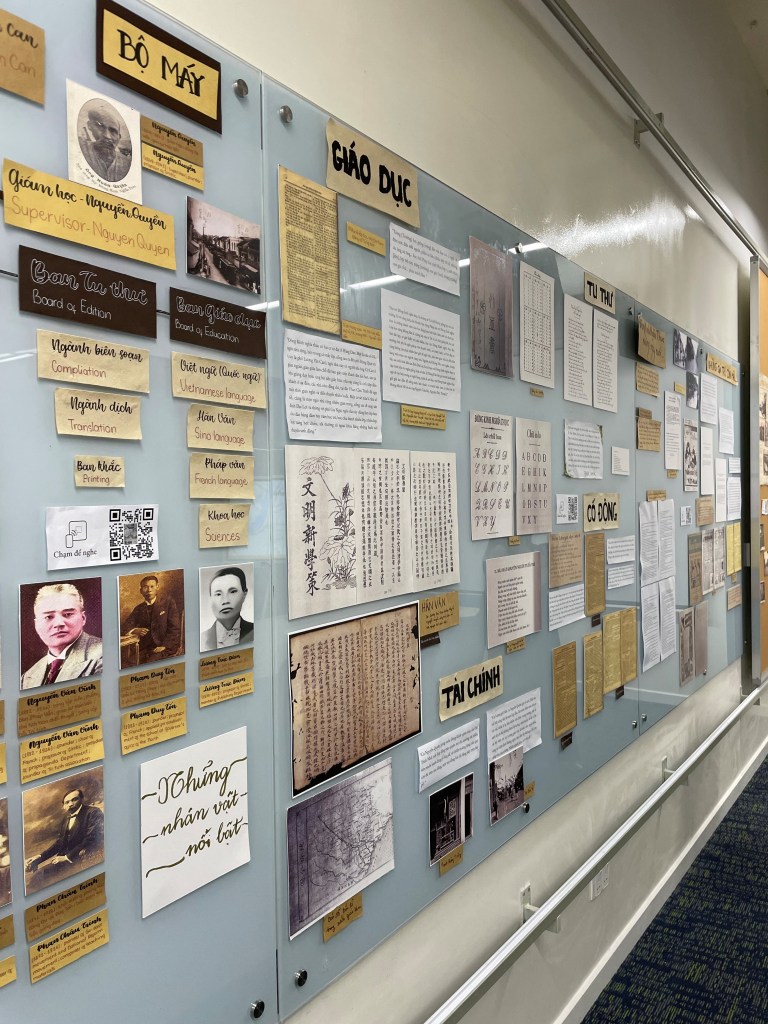
The DKNT served as a precedent for thinking about cultural strength, based on Chinese and Japanese models. With influence from Fukuzawa Yugichi, Kang Youwei and Liang Qichao, discourses around cultural strength were not grounded in military or material power, necessarily, but in knowledge and education of a people. This was thus the mission of the DKNT, despite its short-lived existence, to educate the Vietnamese, particularly of the close relationship between politics, progress and education. When we look at the textual materials available for students at the time, including the Quốc Văn Tập Đọc (National Literature Reader) and the Quốc Dân Đọc Bản (People’s National Manual), moral education was a fundamental part of the DKNT curriculum. One of the most important lessons these texts promulgated, however, was that individuals alone were imbued with the responsibility of saving their country, and therefore it was necessary to teach them about their rights and political duties. This would be radical for the education of women, because granted access to such materials, as well as lectures and lessons alongside men, women were learning that they, too, had a national role to play. While these roles were still often the gendered roles of mother and wife, the responsibility of their task was extrapolated to that of the national level. This indeed legitimized the separation of social spheres, and attributed social responsibility to women. But I believe that it’s on this premise that further arguments about the inclusion of women, because of their social responsibility, could be made.
One important case is to look at the emergence and nature of the journal Phụ Nữ Tân Văn (PNTV), which ran between 1929-1934. Just as the DKNT encourage women to attend classes, inviting women to consider breaking down the boundaries of their national contributions, so too did the journal on PNTV and what it meant to educate women. The journal covered topics of all kinds, from religion, to women’s education, to economical changes in the country. It saw itself as “a literary organ concerned with issues relating to women, which are none other than those relating to society. ” In addition to creating a platform for the discussion of women’s issues, it also propogated important messages to women and children, about the importance of education, encouraging and empowering women to be self-sufficient, to engage in debates with others, and that education is one opens one’s mind. Indeed, women still had a national role to fulfill, but PNTV played an important role in making those roles and contributions less prescriptive, and more ambiguous. I end with an early cover of PNTV – which was utilized for over a year – and to contrast this image with the lesson conveyed by Phan Bội Châu in my opening. The cover features three women, each dressed to represent the North, Central and South regions of Vietnam. The caption, a couplet, reads, “Phấn son tô điểm sơn hà, làm cho rõ mặt đàn bà nước Nam [Powder and lipstick serve to embellish the Motherland, making clear the countenance of Vietnamese women].” Here, the Vietnamese woman is not married or a mother to the Vietnamese nation, she is its very face. The way make-up might outline the features of a woman’s face is none other than the ink that reveals the features of Vietnam, outlining and filling in its physical features, mountains and rivers, but also its true value (double meaning for countenance). She does not exist relationally to the nation, bound by any social or moral contract. In being a metaphor for the nation itself, she is versatile and diverse, which very much represents the content that the journal wished to share with its public. In this light, issues concerning women were issues that concerned the rest of the society.
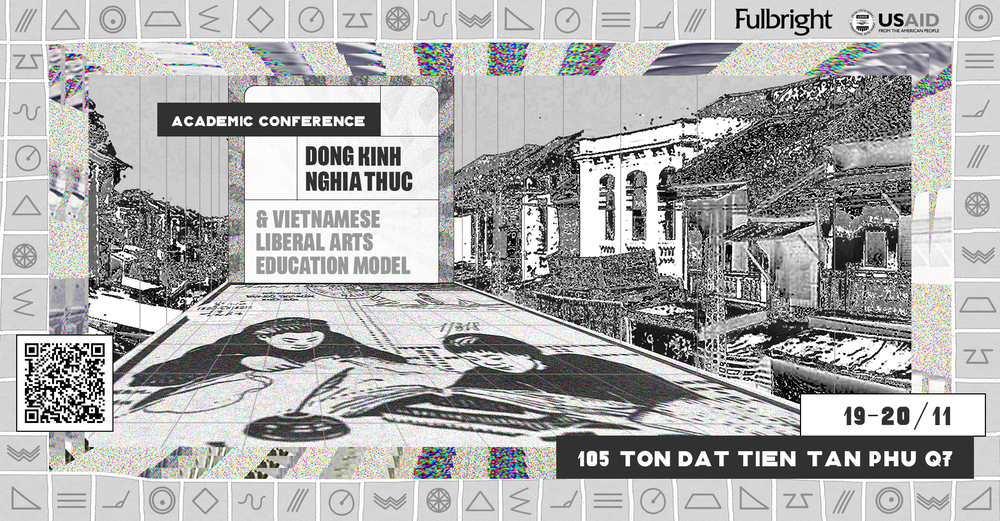
The Vietnam Studies Center at Fulbright University Vietnam organized its first international conference around the Tonkin Free School and its legacy in the liberal arts education model at Fulbright.
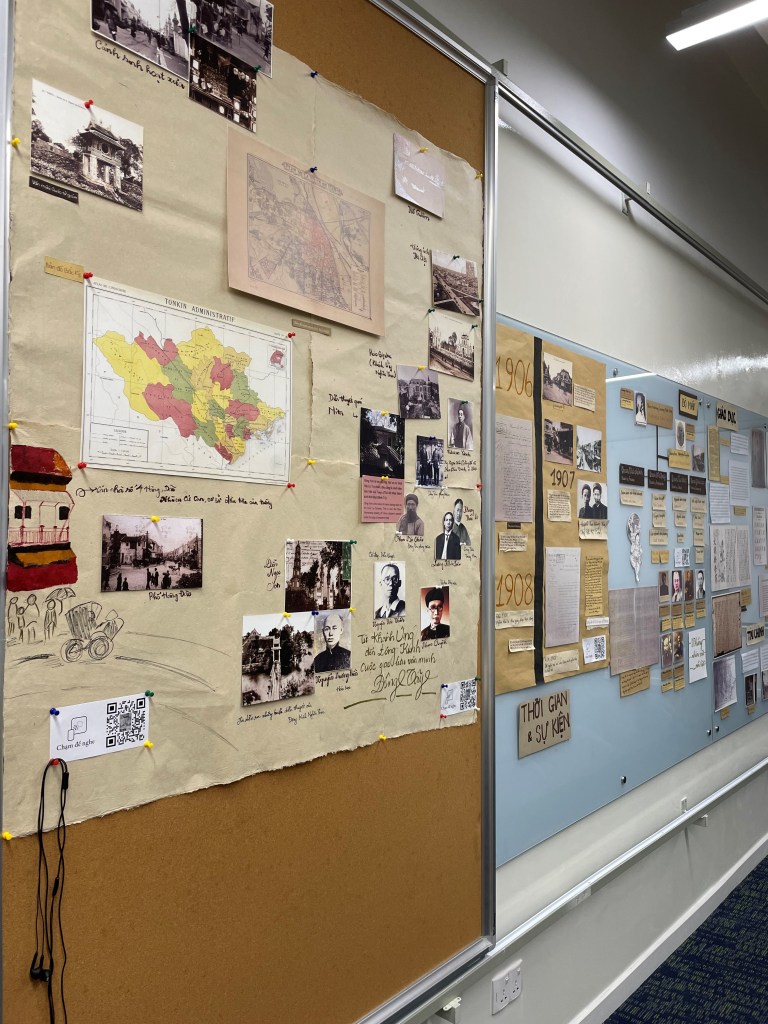
The Tonkin Free School was radical because it was the first institution to open education to all, men and women, adults and children. With lectures in the crowded streets of Hang Dao in Hanoi, it coalesced ideas behind the Keio Gijuku, founded by Fukuzawa Yugichi, who believed that education would mitigate social disparities and the self-strengthening rhetorics of Liang Qichao and Kang Youwei, which claimed that in order to strengthen a nation, one had to first begin with the self.
If you’re interested in learning more, Nam Phong Dialogues will be releasing an episode on this very topic within the next few weeks! Stay tuned (: !
Panel 1: Cultural exchanges between Vietnam and East Asian countries from the late 19th to the early 20th centuries Panel 2: Dong Kinh Nghia Thuc, Vietnamese literati and “Western-learning” intelligentsia, with a focus on Phan Boi Chau and Phan Chau Trinh Panel 3: The liberal spirit of Dong Kinh Nghia Thuc Panel 4: Lessons from Dong Kinh Nghia Thuc for Contemporary Vietnamese (higher) education
Student exhibition on the Dong Kinh Nghia Thuc and its legacies.
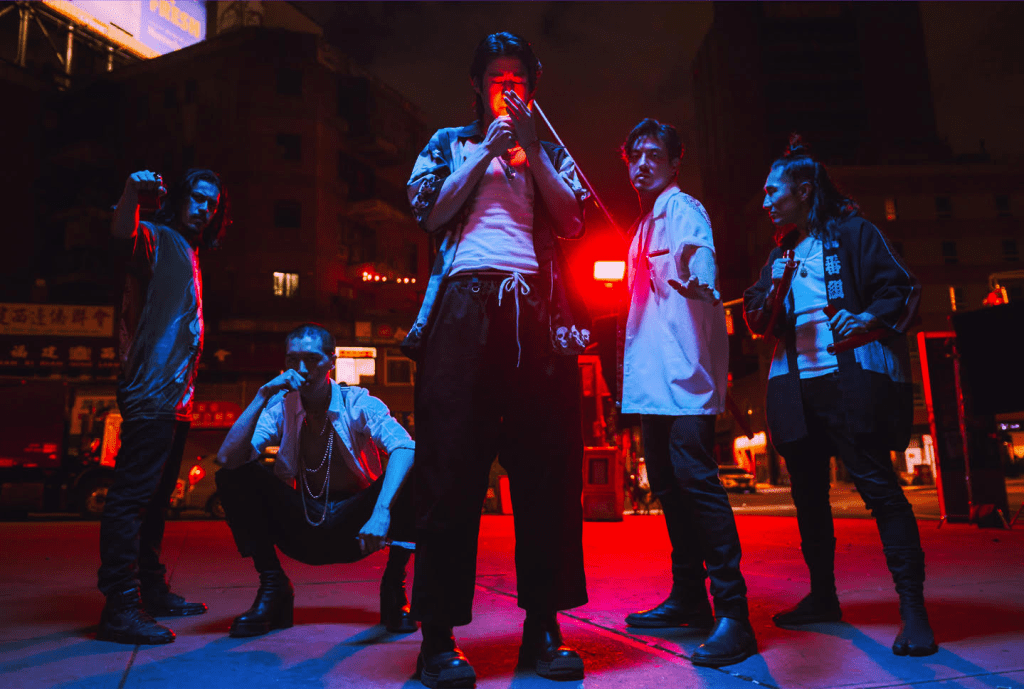
One of the best things about being in New York City this past year was getting looped into creative projects adjacent to my expertise. One of those projects was being a language consultant for a short film, Don’t directed by creative director, Sally Tran.
” Don’t is a 14-minute narrative short film that celebrates femme and genderqueer identities. The film’s empowering narrative centers on a female character and depicts the triumphs of solidarity and ambition with kickass moves and visual effects and four Asian Languages.”
Go here to learn more, watch the teaser, and support the project!
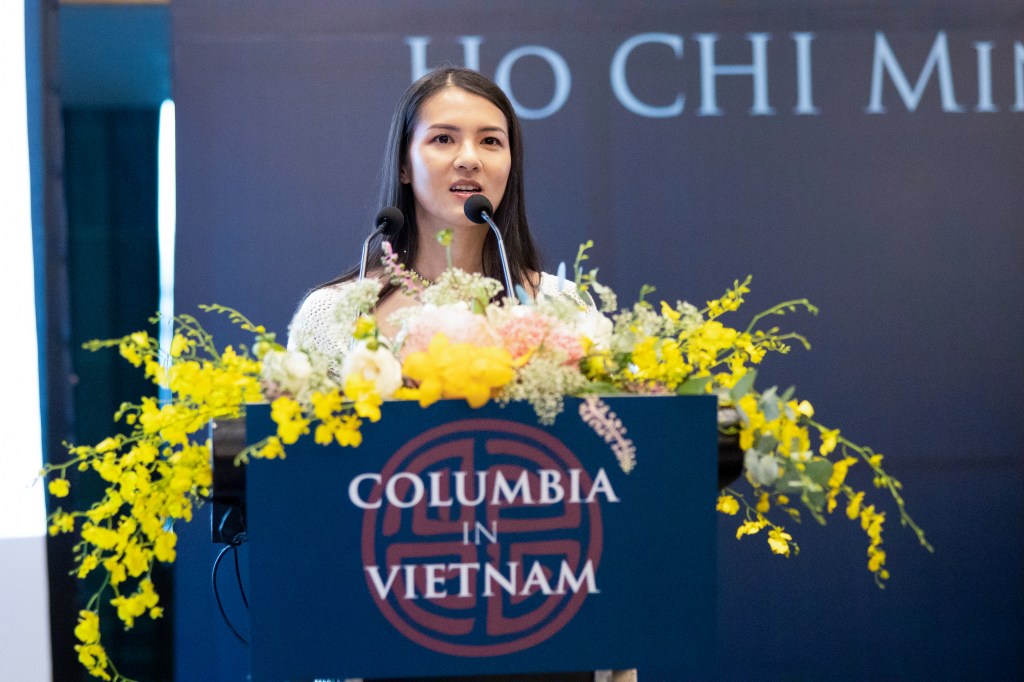
My time at Columbia ended with a trip to Vietnam with a Columbia Delegation to help bring awareness to Columbia’s burgeoning Vietnam Studies program, led by Profs. Lien-Hang Nguyen and John Phan. We presented in Hanoi as well as Ho Chi Minh City to state officials, alumni, entrepreneurs, and youth about building a global-minded Vietnam Studies curriculum at Columbia. I had the very easy task of talking about how I conduct research at Columbia, and I can give it to you here in a nutshell: it has very little to do with burying myself behind books at the library (though Columbia does have a very extensive collection of works on Vietnam) but everything to do with being involved in the community, getting my students excited about Vietnamese history by incorporating research into my teaching, and working alongside experts of other regions beyond Vietnam.
In this new relationship with Columbia, Fulbright University Vietnam – my new home institution – will similarly think about Vietnam beyond its immediate boundaries and consider how such partnerships with universities around the world can broaden resources for research and teaching. Signing the MOU with Columbia is an important step for both institutions, and it was a great privilege to be the hinge for such a partnership. You can read more about the MOU here.




 yen n. vu